All storiesPublished 2 min read
Locally it is the bhulan. Scientists call it Platanista gangetica minor, the Indus river dolphin. It lives in the Indus system and nowhere else, and it is listed as endangered.
Its world has shrunk. In 1870 the dolphin ranged over about 3,400 km of river; by the 2001 assessment that was down to about 1,000 km — roughly a fifth. The main reason is the same infrastructure that made this district rich: barrages and the diversion of river water into canals.
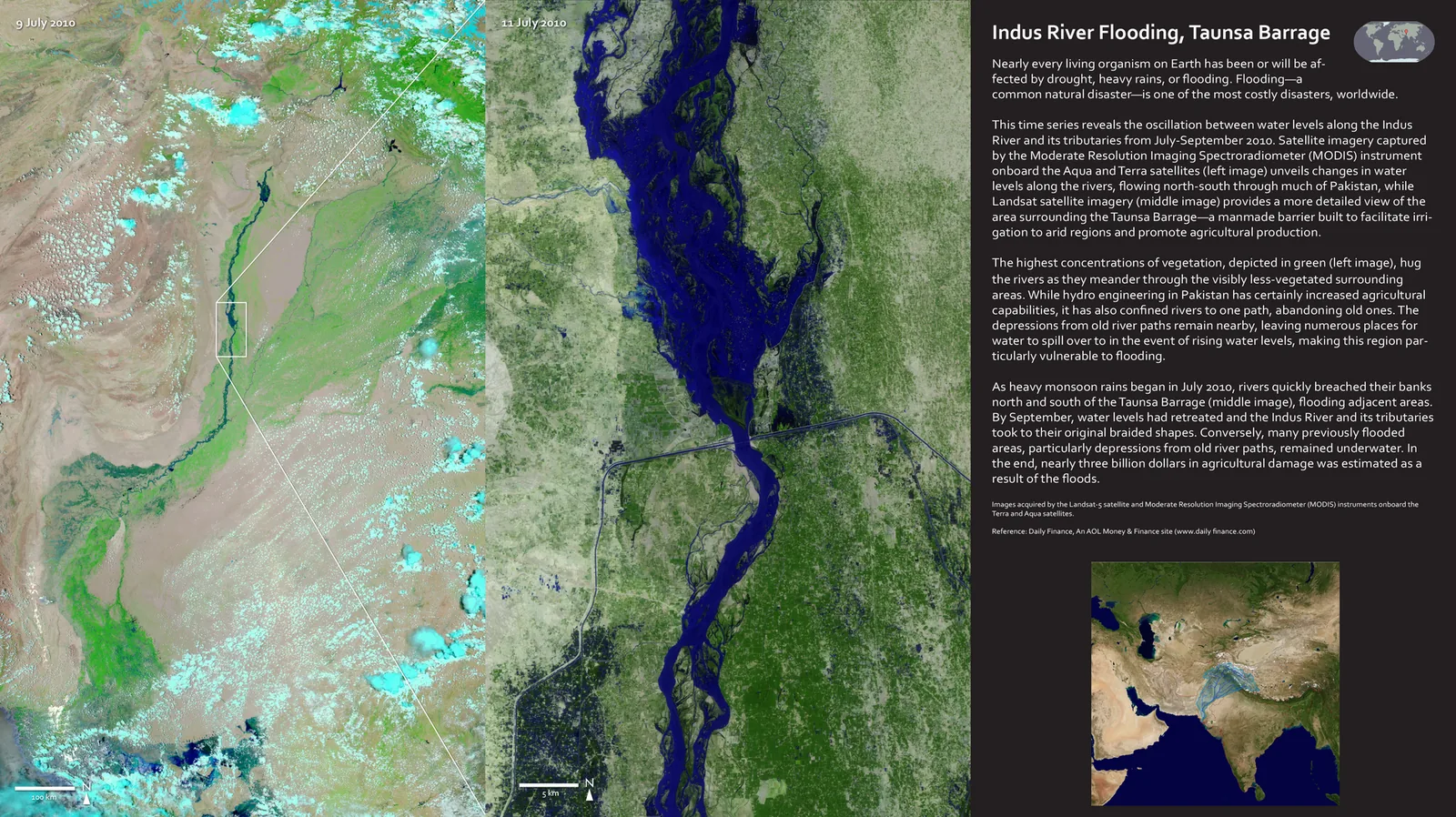
Counting from Taunsa
Barrages cut the river into reaches, and dolphins are counted reach by reach. In WWF-Pakistan's 2017 survey, observers counted 170 dolphins between Chashma and Taunsa, and 571 in the reach that starts at Taunsa Barrage and runs down to Guddu. Across the river the estimate was 1,987, up from about 1,200 in 2001.
The count in the Taunsa–Guddu reach has grown survey by survey: 259 in 2001, 465 in 2011–12, 571 in 2017. Upstream the news is worse. In 2018 surveyors found no dolphins at all between Jinnah and Chashma barrages, and that group is now considered lost.
Nets and closed gates
Two threats come up again and again. In the low-water season, canal gates close and dolphins that swam into the canals are left in shrinking pools, where most die unless rescued. And dolphins drown in fishing nets; the WWF report calls intensive, largely unregulated fishing between Taunsa and Sukkur a persistent problem. A 2026 review found gillnets behind 52% of documented deaths between 2008 and 2023.
On 11 January 2025, in very low water just below the barrage's downstream bridge, five dolphins — two adults and three calves — were found caught in nets. Punjab wildlife and fisheries staff, local volunteers and WWF's Taunsa information centre freed them into the main river, and the regional wildlife director suspended fishing there until the water rose.
A protected river
The water around the barrage has been a Ramsar Wetland of International Importance since 22 March 1996: the Taunsa Barrage Wildlife Sanctuary, 6,756 hectares of river, islands and marsh. In 2026 Pakistan went further, declaring a Punjnad dolphin sanctuary of about 200 km in Punjab, linked to the Guddu–Sukkur reserve in Sindh to form a protected corridor of roughly 400 km.
Sources
Facts in this story come from the sources below. Spotted an error? Write to hello@kotaddu.pk.